Sticky floor after mopping: the causes and how to mop
A sticky floor after mopping usually means leftover cleaner. Here's why it happens, how to lift the film and how to mop so your floor stays clean.
Checked by jingwen.ong@thetrulylovingcompany.com · Published 18 November 2026
A sticky floor after mopping is rarely a dirty floor. It's usually residue: too much cleaner in the bucket, cloudy mop water or a dirty mop head leaves a thin film that makes the floor feel tacky under bare feet. Measure the dose, change the water when it turns cloudy, wring the mop until it's only damp and let the floor dry completely.
Why is my floor sticky after mopping?
You use too much floor cleaner
More cleaner doesn't mean a cleaner floor. The water can't rinse it away, so the extra stays behind and dries into a sticky residue. If your bucket foams up, there's too much cleaning product in it.
Dirty mop water
One bucket for the whole house carries kitchen grease and grime into the living room. Once the water turns cloudy or grey, you're spreading dirty water across the floor instead of lifting dirt.
A mop head that's put away wet
It holds on to old soap and dirt, then wipes them back onto the floor next time. Wash the mop or mop pads after each use, hang them in the sun and start every round with a clean mop.
Grease and sugary spills
Wok splatter by the stove or a spilled glass of sirap needs wiping before you mop. A quick pass spreads it thinner rather than lifting it.
A floor left too wet
Malaysian air is humid all year, so a floor mopped with too much water dries slowly. Walk on it while it's damp and your feet bring the dust straight back.
Detergent or the wrong cleaner in the bucket
Washing-up liquid and laundry detergent make plenty of suds and leave residue on a floor. Each cleaner's label says which floors it suits and how to dilute it.
Why do floors look dull after mopping?
The same residue that makes floors feel sticky also dulls the shine. A clean floor shines on its own; more soap only adds another layer.
How to clean sticky floors and remove sticky film
Plain water is the quickest fix. It helps remove residue without adding more, so the stickiness doesn't come back.
- Sweep or vacuum.
- Fill a bucket with warm, plain water. No cleaning product this time.
- Mop the floor with a clean, well-wrung microfibre, cotton or sponge mop, and rinse it often.
- Change the water when it turns cloudy. If the floor still feels sticky, go over it once more, until it feels clean underfoot.
- Open the windows and switch on the fan to dry the floor, then go back to the dose on the label next time.
If floors stay sticky after two rounds, the floor may need a deep clean: ask its installer or a cleaning professional before you try anything stronger, especially on stone or wood.
How to mop to prevent sticky floors
- Sweep or vacuum first. Dust plus water makes a thin layer of mud.
- Spot clean grease and spills with a damp cloth. For dried syrup, lay a wet cloth over it for a few minutes, then scrub gently.
- Measure the amount of floor cleaner with the bottle's cap, never by eye. Not sure how much your bucket holds? Fill it once with five litres (five 1-litre bottles) and mark the waterline.
- Wring the mop until it's damp, not dripping. The floor should dry within minutes.
- Mop from the far corner towards the door, so you never stand on the part you've just done.
- Change the water after the kitchen, or sooner if it's cloudy. Two buckets help: one with the cleaning solution and a rinse bucket of fresh water for the mop, so it never goes back into soapy water.
- Open the windows and switch on the ceiling fan. Keep children and pets off until the floor is dry, so there are no footprints and no one slips. If you share your home with a cat or dog, see our guide to mopping when you have pets.
- Wash the mop after use and hang it up to air.
Do you need to rinse the floor after you mop?
Follow the label. A cleaner marked "no rinsing required" is made to be used at its dose and left to dry. A plain-water rinse only helps when residue has built up, for example after months of using too much cleaner.
Why is my floor still sticky after mopping with vinegar?
Usually because the real cause is still there, such as too much product or cloudy water. Vinegar changes neither, so if the floor is still sticky, go back to plain water.
If you use vinegar at all, keep it off marble, terrazzo and other stone floors. It's an acid, and acids dissolve part of the stone and leave dull etch marks (GSA on etch marks in marble). For terrazzo, GSA advises a neutral cleaner, diluted as its maker directs (GSA on terrazzo care). On other floors, check the maker's care advice before you try a water and vinegar mix.
Mixing in baking soda won't make it stronger. The two react straight away into water, a salt and carbon dioxide, and the fizz itself does no cleaning (The Conversation). Fabric softener belongs in the final rinse of a laundry load, not in mop water. The fix is less product, not more ingredients.
Hot or warm water for floor cleaning?
Warm water is enough for most floors. It helps loosen cooking oil, and it won't scald your hands as you wring the mop. There's no need for boiling water.
How to mop ceramic tile, wood flooring and other floor types
Glazed & Porcelain Tiles: Damp mop with properly diluted floor cleaner. Avoid excessive foam.
Marble, Terrazzo & Natural Stone: Use a cleaner suitable for natural stone. Avoid acidic cleaners such as vinegar or lemon.
Sealed Hardwood & Laminate: Use a well-wrung, slightly damp mop. Avoid excess water and steam mops.
Vinyl & SPC Flooring: Damp mop according to the flooring manufacturer’s instructions. Avoid standing water.
For more, see our guides to marble and terrazzo floors and wood and laminate floors.
Our Green floor cleaners: non-sticky, no rinse
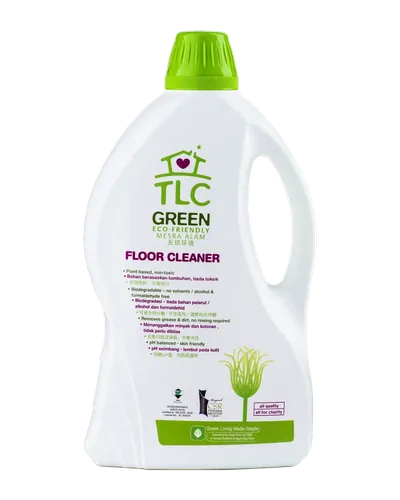
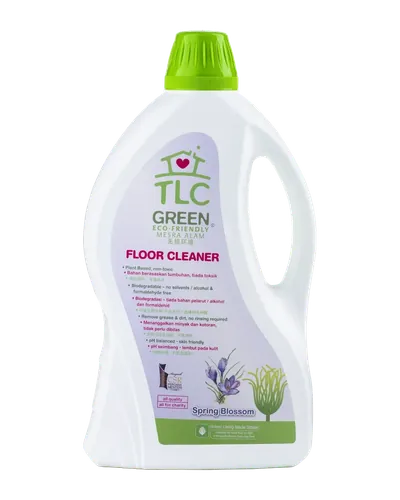
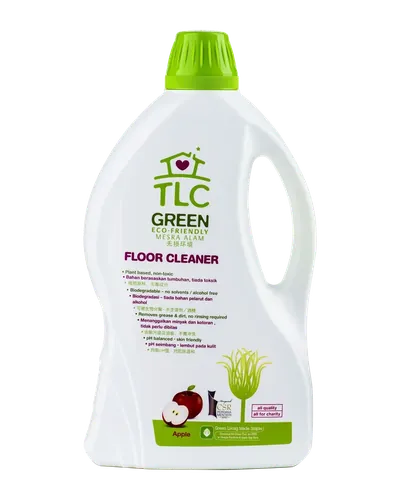
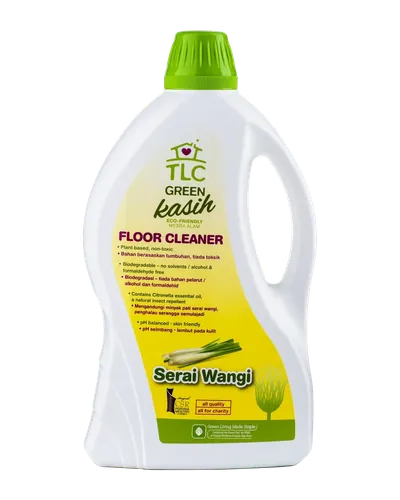
"Mop once, no rinse, bare feet all day." That's the idea behind our Green Floor Cleaner 2L. Shake the bottle, mix 1½ caps in a 5-litre bucket of water, mop and leave to dry: no rinsing required.
Its plant-based, biodegradable formula has a biodegradable degreaser that cuts grease and lifts dirt. It's suitable for all types of flooring, including tiles, marble and laminate.
Choose Original, Green Apple or Spring Blossom, or Green Kasih Floor Cleaner Serai Wangi (citronella), all at the same dose. See them together in Floors.
Find TLC at AEON, Jaya Grocer, Village Grocer, Lotus's and other supermarkets across Malaysia. Find a store near you. 100% of TLC's dividends go to charity.