How to wash baby clothes: a guide for new parents
How to wash baby clothes in a Malaysian home: wash new clothes first, rinse out the laundry detergent, treat stains in cold water and dry them fully.
Checked by jingwen.ong@thetrulylovingcompany.com · Published 18 November 2026
Wash new baby clothes before the first wear, use a mild detergent at the dose on its label, and rinse until no suds are left. Treat milk, spit-up and poo stains with cold water first, then dry everything completely.
A new baby can create a lot of laundry. This guide to washing baby clothes covers machines, hand washing, stains and drying in humid weather.
Should you wash baby clothes before use?
Yes. The American Academy of Pediatrics (AAP) says it's generally a good idea to wash all clothes before using them. New clothes can carry a finish from the factory and may have passed through many hands.
In the weeks before your due date, wash and dry newborn clothes, hand-me-downs, cot sheets, bibs, towels and other baby items, so all is ready for your little one.
Should you wash baby clothes separately?
Not always. The AAP notes that many parents simply wash their baby's clothes with the rest of the laundry. Washing them separately from the rest makes sense when:
- your baby's skin flares up easily, or your doctor has diagnosed eczema;
- adult clothes are very dirty, such as work clothes or sports kit;
- there's a nappy leak or vomit, which needs a cold-water soak first.
Choosing a detergent for baby clothes
Many new parents wonder whether they need a special baby laundry detergent or can use a regular detergent. The AAP says many families do without one, and suggests a milder one if your baby's skin reacts. Check the label for four things:
- What it's made without. The US National Eczema Association (NEA) names fragrances and dyes as the usual irritants for skin that reacts easily.
- How easily it rinses out. Detergent left on fabric may irritate sensitive skin, the NEA notes, and liquids tend to leave less residue than powders.
- Whether it suits your washing machine. Front-loaders need a low-suds formula (here's why).
- A clear dose. Using more doesn't make clothes cleaner. It just leaves more in the fabric.
Our plant-based laundry detergent for baby clothes
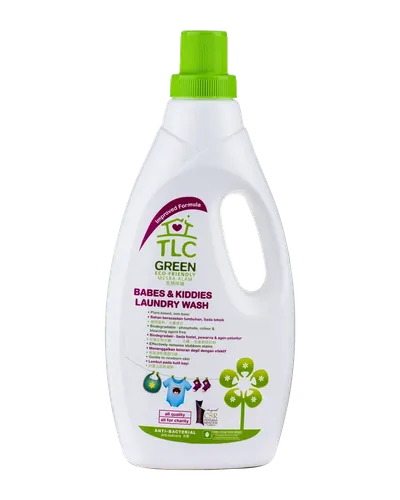
Green Babes & Kiddies Laundry Wash 2L is made for nappies and babies' clothing. It's from our Green range: plant-based and biodegradable, low-suds for top- and front-load machines, and suitable for cold-water washing.
- Made without: phosphate, bleaching agents, optical brightener, parabens, dyes, colouring and formaldehyde. Not tested on animals.
- Dose: ½ cap for a medium machine load, 1 cap for a full load, or ½ cap in 10 litres of water by hand.
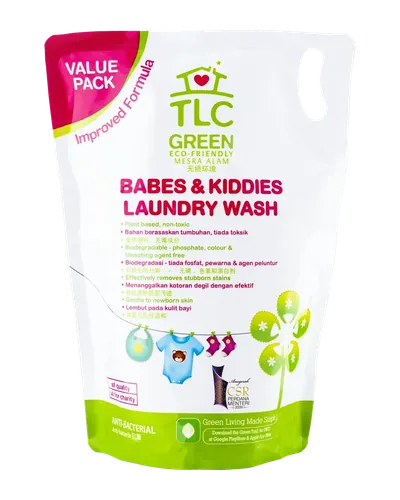
- Refill: Green Babes & Kiddies Laundry Wash (Refill Pack) 1.8L tops up the same bottle. Same formula, less plastic. Here's how to refill a detergent bottle without spills.
Using a washing machine, step by step
Can baby clothes go in the washing machine? Yes, unless the care label says otherwise.
- Sort the load. Baby clothes, bibs, cot sheets and cloth nappies go together.
- Read the care label on each garment for its specific washing instructions.
- Remove solid waste first. Rinse fresh stains under the cold tap and rub a little laundry liquid onto the mark.
- Bag the small things. Put socks and mittens in a mesh laundry bag.
- Measure the dose for a medium or full load.
- Choose a normal or gentle wash cycle, plus an extra rinse cycle if your machine has one.
- Unload straight away. Washed clothes left damp in the drum soon smell musty.
What temperature and setting should you use?
Follow the washing cycle and temperature on the care label. Cold water suits a product labelled for cold-water washing, and protein stains need it first. Leave out bleach unless the label allows it.
Hand washing, step by step
- Fill a basin with 10 litres of cool or lukewarm water and add the hand-wash dose (½ cap of Babes & Kiddies).
- Soak the clothes for a few minutes, then rub stained areas gently.
- Rinse in clean water until it stays clear with no suds, usually two or three times.
- Press the water out gently rather than wringing.
How to remove stains from baby clothes
Breast milk, formula milk, spit-up, vomit and baby poo are protein-based stains. According to Iowa State University Extension, these stains should be treated with cold water first, as hot water can cause them to set. Soaking in cold water before washing in warm water can help remove most fresh stains.
Breast Milk, Formula Milk & Spit-Up
-
First: Rinse the stained area under cold running water.
-
Then: Gently rub in a small amount of laundry detergent and wash as usual.
Nappy Leaks (Baby Poo)
-
First: Remove any solids and rinse with cold water.
-
Then: Soak in cold water before washing with warm water.
Fruit & Juice Stains
-
First: Gently scrape off or blot away any excess residue.
-
Then: Wash using the warmest water temperature permitted on the garment's care label.
Baby Oil & Cream Stains
-
First: Blot away any excess oil or cream.
-
Then: Gently rub in laundry detergent and wash using the warmest water temperature permitted on the garment's care label.
Important Tips: Avoid using bar soap on fruit stains, as it may make them harder to remove. If using a stain remover, apply only one product at a time. Always check that stains are completely removed before ironing or tumble-drying, as heat can permanently set remaining stains.
Can you use fabric softener on baby clothes?
It's optional. If you're adding fabric conditioner, pour it into the softener compartment for the final rinse, never straight onto the clothes. If your baby's skin reacts after a change, go back to what you used before.
How to dry baby clothes in humid weather
In Malaysian weather, drying matters as much as washing. Mildew grows on damp clothing in warm, moist air, leaving a musty smell and small black spots.
- Hang clothes as soon as the cycle ends, with space between each piece.
- Indoors or on a condo balcony, a fan keeps the air moving.
- During the northeast monsoon, usually November to March, small loads every day or two dry faster.
- In a tumble dryer, follow the care label.
Folding and storing washed clothes
Fold only when everything is completely dry, including seams: dry storage helps prevent mildew. Open the cupboard now and then to let air in.
What if your baby has eczema or sensitive skin?
We can't give medical advice. If your baby has a rash, dry patches or eczema, ask your doctor first, including about laundry.
The NEA's laundry advice includes an extra rinse, and finding a product that works can take trial and error. Change one thing at a time.
To ask about an ingredient in Babes & Kiddies, write to us through Help; we reply within 2 working days. See also reading a detergent label if you have sensitive skin.
Ready for the first wash?
Find a store near you that carries TLC. 100% of TLC's dividends go to charity.